
A single slot reel can hold anywhere from a handful to several dozen symbols, and the math behind how those symbols line up determines everything about your session - how often you win, how much you win, and how long your bankroll survives. Most players never look past the spin button, yet the mechanics underneath it explain why some sessions feel generous and others drain a balance in minutes. Understanding those mechanics is the difference between playing on hope and playing with a plan.
Online slot betting has grown into a far more varied activity than the old three-reel machines suggested. Modern platforms offer thousands of titles, each with distinct volatility, payout structures, and betting ranges, which means players now have real tools to shape their own experience rather than accept whatever a single machine offers. For those ready to compare formats and see how different platforms structure their offers, there's a detailed breakdown available at https://playwise365.com/promo/slots/money-coming-expand-bets-slot/ that walks through current options step by step. Once you see the range of choices on the table, the appeal of treating slots as a flexible betting category - not a single repetitive game - becomes obvious.
This piece breaks down how slot machine bets actually work, what separates a mediocre session from one that keeps money coming in, and how expanding your betting options across different slot types can improve both enjoyment and results over time.
What Online Slot Betting Really Means
Online slot betting refers to wagering real or credited funds on digital slot machines through a licensed platform, where outcomes are determined by a random number generator rather than mechanical reels. Unlike physical machines, online versions can offer far more paylines, bonus mechanics, and betting increments, which changes how players approach strategy and bankroll management.
How Digital Slots Differ From Traditional Machines
Traditional slot machines relied on physical reel weighting to determine odds, while digital slots use software-based random number generation certified by independent testing agencies. This shift allows for more paylines, cluster-pay mechanics, and megaways-style structures that didn't exist in mechanical cabinets. It also means the house edge and return-to-player percentage are published and verifiable, giving players clearer information before they commit any money.
The Role of RNG and Return-to-Player Rates
Every legitimate online slot displays a theoretical return-to-player (RTP) rate, typically expressed as a percentage that indicates how much of all wagered money the game returns to players over millions of spins. A 96% RTP doesn't guarantee any individual session will return 96 cents per dollar - it describes long-term behavior, not short-term results. Knowing this distinction prevents players from misreading a cold streak as a broken machine or a hot streak as a permanent trend.
Understanding Slot Machine Bets and Their Structure
Slot machine bets are built from a few core components: coin value, number of paylines or ways to win, and bet multiplier. Together these determine your total wager per spin, and adjusting any one of them changes both your risk exposure and your potential payout.
Fixed Paylines vs. Ways-to-Win Systems
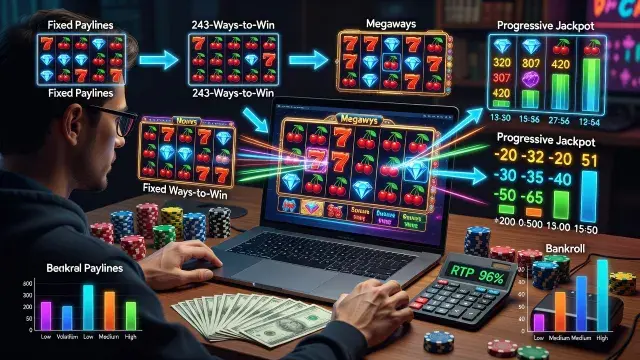
Fixed payline slots require betting on a set number of lines, while ways-to-win systems (like 243-ways or megaways formats) pay for matching symbols in adjacent reels regardless of position. Ways-to-win games generally offer more frequent small wins, while fixed payline games can concentrate payouts into fewer, larger hits depending on the paytable design.
Bet Size, Volatility, and Bankroll Impact
Volatility describes how a slot distributes its payouts. Low-volatility games return smaller wins more often, which suits players who want steady, incremental money coming in without large swings. High-volatility games pay less frequently but with bigger multipliers, appealing to players chasing a substantial single hit even if it means longer dry spells between wins.
- Low volatility: frequent small wins, longer playtime per dollar wagered
- Medium volatility: balanced frequency and payout size
- High volatility: rare but large wins, higher bankroll requirements
Adjusting Bets Based on Session Goals
A player aiming for extended playtime on a limited budget should favor smaller bets on low-volatility titles. A player targeting a specific jackpot or bonus round might size bets higher on a game with a known high-payout ceiling. Matching bet size to session goal is one of the simplest ways to control outcomes without needing any special system.
How Winning Money Slots Are Identified and Chosen
Not every slot machine offers the same realistic chance of producing winning money slots sessions. Identifying stronger options requires looking past flashy graphics and checking the underlying numbers.
Reading Paytables Before You Play
Every slot's paytable lists symbol values, bonus triggers, and special feature conditions. Reading it before placing a single bet reveals whether a game's top prize is realistically attainable or reserved for extreme volatility scenarios that rarely pay out during normal play.
Jackpot Types: Fixed, Progressive, and Networked
Fixed jackpots pay a set maximum regardless of how many people play. Progressive jackpots grow with each wager placed across a linked network of machines, sometimes reaching amounts far beyond a single game's normal ceiling. Networked progressives pool contributions across multiple casinos, which can produce larger prizes but also come with lower individual odds of hitting them.
Signs a Slot Favors Consistent Payouts
Games with higher published RTP, frequent small bonus triggers, and lower volatility ratings tend to favor steadier returns rather than rare massive wins. Checking a game's volatility index alongside its RTP gives a more complete picture than relying on RTP alone.
Strategies to Expand Betting Options Across Slot Types
Sticking to one game limits both entertainment and financial upside. Diversifying across slot categories lets players match their mood, budget, and risk tolerance to the right format on any given day.
Mixing Classic, Video, and Progressive Slots
Classic three-reel slots offer simplicity and low variance, video slots bring bonus rounds and thematic depth, and progressive slots introduce the possibility of outsized wins. Rotating between these categories keeps sessions from becoming repetitive and spreads risk across different payout structures.
Using Bonus Rounds and Multipliers Strategically
Bonus rounds - free spins, pick-and-click features, multiplier wheels - often carry better effective odds than the base game because they're triggered less often but pay disproportionately more when they land. Prioritizing games with well-designed bonus mechanics can meaningfully improve overall return without increasing base bet size.
Setting Betting Limits That Support Long-Term Play
Expanding betting options doesn't mean expanding risk without limits. Setting a per-session cap and a per-spin maximum keeps exploration of new games from turning into uncontrolled losses. Discipline around limits is what allows variety to remain enjoyable rather than costly.
Managing Bankroll to Keep Money Coming In
Bankroll management is the difference between a hobby that occasionally pays for itself and one that quietly erodes savings. Structuring bets around a defined bankroll turns slot play into something closer to a controlled activity than a gamble in the reckless sense.
Setting a Realistic Session Budget
Before playing, decide on an amount you can lose without financial consequence, then divide it into session-sized portions. This prevents a single bad run from consuming funds meant for multiple sessions and keeps the activity sustainable over weeks or months rather than a single night.
Timing Withdrawals to Lock In Wins
One of the most overlooked disciplines in online slot betting is knowing when to withdraw. Locking in a portion of winnings after a strong session protects gains from being reabsorbed into further play, which is often what separates players who see consistent money coming in from those who give everything back.
Avoiding Common Bankroll Mistakes
Chasing losses by increasing bet size after a downturn, ignoring session budgets, and treating progressive jackpot chasing as a primary strategy rather than an occasional bonus goal are the three most common ways bankrolls collapse. Recognizing these patterns early prevents them from becoming habitual.
Choosing a Platform That Supports Smart Slot Betting
The platform you choose affects game selection, payout speed, and the transparency of RTP information - all of which shape how effectively you can apply everything covered above.
Licensing and Fair-Play Certification
Licensed platforms are audited by independent testing bodies that verify RNG fairness and published RTP accuracy. Checking for this certification before depositing funds is a basic but essential safeguard against manipulated games.
Game Library Variety and Provider Diversity
Platforms partnering with multiple software providers typically offer a wider mix of volatility levels, themes, and jackpot structures, making it easier to expand betting options without switching sites entirely.
Payout Speed and Withdrawal Transparency
A platform's stated withdrawal timelines and fee structures matter as much as its game selection. Slow or unclear payout policies can undermine even the best bankroll strategy by delaying access to winnings.
Frequently Asked Questions
What is the difference between RTP and volatility in slot games?
RTP measures the average percentage of wagered money a slot returns over the long run, while volatility measures how that money is distributed - in frequent small wins or rare large ones. A game can have identical RTP to another yet feel completely different to play because of volatility differences.
How much should I bet per spin as a beginner?
Start with the smallest available bet increment on a low-volatility game until you understand its payout rhythm. This approach preserves your bankroll while you learn how a specific title behaves before committing larger amounts.
Do progressive jackpot slots pay out less often than regular slots?
Yes, progressive jackpots typically have lower base-game RTP and less frequent bonus triggers because a portion of every wager feeds the growing jackpot pool. They can still be worth playing occasionally, but they shouldn't form the core of a steady betting strategy.
Can switching between different slot types actually improve results?
Switching won't change the mathematical edge of any single game, but it can improve your overall experience and risk distribution by matching game type to your current bankroll and mood. This is what expanding betting options practically means in day-to-day play.
How do I know if an online slot platform is trustworthy?
Check for licensing from a recognized gaming authority, published RTP figures for individual games, and independent RNG certification. Transparent withdrawal terms and clear game rules are additional signs of a platform operating fairly.
Is it possible to consistently win money from slots?
Slots are designed with a built-in house edge, so no strategy guarantees consistent profit over the long run. Disciplined bankroll management, informed game selection, and timely withdrawals can improve your odds of walking away ahead more often, but they don't eliminate the fundamental math working against the player.